
Early humans and the beginning of settled life
iv. Answer the following questions
2. What kind of lifestyle did early humans lead during the Palaeolithic Age?
Answer:
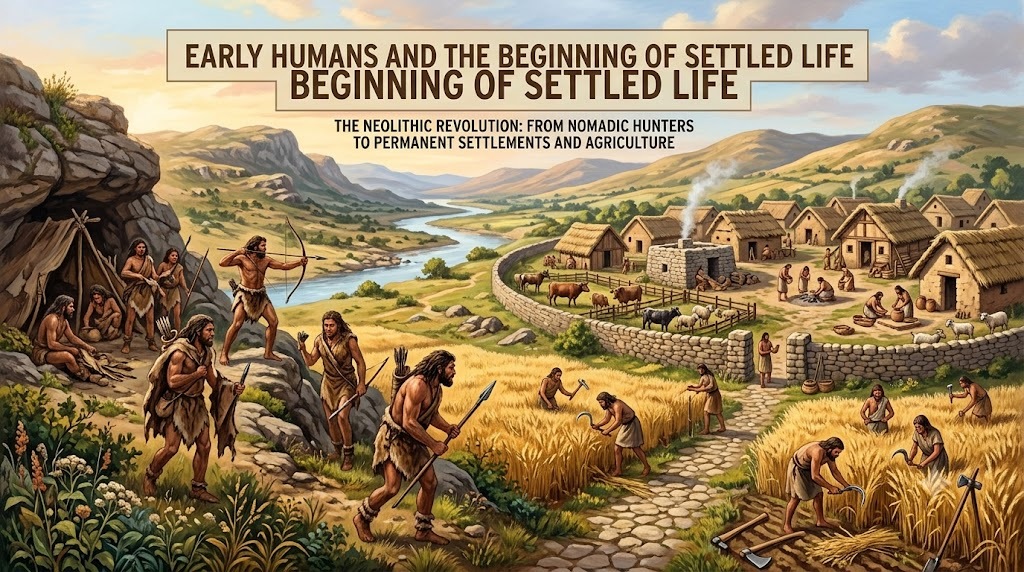
Early humans lived a nomadic hunter-gatherer life. They moved from place to place in search of food and water, lived in caves or under trees, hunted wild animals, gathered fruits and roots, and used simple stone tools for survival.
3. Why was the discovery of fire important in early human life?
Answer:
The discovery of fire was important because it provided warmth, light, and protection from wild animals. It helped people cook food, making it safer and easier to digest, and enabled them to survive in colder regions.
4. Describe the tools used during the Mesolithic Age.
Answer:
Mesolithic people used small, sharp stone tools called microliths. These were attached to wood or bone to make arrows, spears, sickles, and knives. They also used fishing hooks and harpoons for hunting and fishing.
5. How was life during the Neolithic Age different from that during the Palaeolithic Age?
Answer:
Neolithic people lived in permanent villages, practised farming, domesticated animals, and made polished stone tools and pottery. In contrast, Palaeolithic people were nomadic hunters and gatherers who used rough stone tools and lived in caves.
6. What types of pottery were made in the Neolithic Age, and how were they useful?
Answer:
Neolithic people made handmade and wheel-made clay pots, often decorated with simple designs. These pots were baked to become strong and were used for cooking food, storing grains and water, and carrying household items.
7. If you were an archaeologist and found a stone tool and a piece of pottery at a site, how would you decide which period they belong to?
Answer:
I would examine their shape, finish, and material. Rough stone tools suggest the Palaeolithic Age, while polished tools and pottery indicate the Neolithic Age. I would also study the soil layer and nearby objects to determine their age.
8. Why were pit houses more suitable for Burzahom in Kashmir? Would they work in Rajasthan? Why or why not?
Answer:
Pit houses suited cold Kashmir because they kept people warm by protecting them from icy winds. They would not be suitable in hot Rajasthan, where underground houses could become uncomfortable and proper ventilation is needed.
9. Describe the important findings at the Neolithic site of Daojali Hading. What do they tell us about the people who lived there?
Answer:
At Daojali Hading, archaeologists found polished stone tools, pottery, grinding stones, and jadeite objects. These discoveries show that people practised farming, made pottery, used advanced tools, and likely traded with people from other regions.