Formation of CJP and the CJP Protests in India
Introduction
The Cockroach Janta Party (CJP) emerged in 2026 as one of the most unusual and rapidly growing youth-led movements in India. What began as a satirical online campaign soon transformed into a nationwide discussion on unemployment, examination irregularities, and youth representation in public affairs.
The movement gained remarkable attention on social media and later organized public demonstrations in several Indian cities. Although it started as a parody, CJP evolved into a platform through which many young Indians expressed their dissatisfaction with issues affecting education and employment.
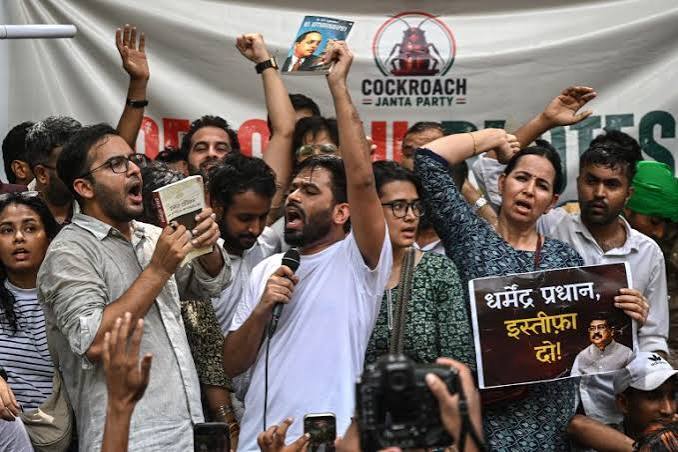
Formation of CJP
The origin of CJP can be traced to a controversy surrounding remarks allegedly made during a judicial proceeding, where unemployed youth were compared to “cockroaches.” The comment triggered strong reactions across social media and became the catalyst for the creation of the Cockroach Janta Party.
The movement was founded by Abhijeet Dipke, who sought to transform public anger into a symbolic campaign representing the frustrations of India’s youth. Instead of rejecting the insult, supporters adopted the “cockroach” symbol as a sign of resilience and unity.
Within a short period, the movement attracted a massive online following. Its message resonated particularly with students, job seekers, and young professionals concerned about employment opportunities, examination scandals, and governance issues.
Objectives of the Movement
CJP positioned itself as a voice for young Indians who felt ignored by traditional political institutions. The movement highlighted several concerns:
Rising youth unemployment.
Examination paper leaks and recruitment irregularities.
Accountability in public institutions.
Greater youth participation in decision-making.
Educational reforms and transparency.
Supporters argued that these issues directly affected the future of millions of students and job seekers across the country.
The CJP Protests
The movement soon moved beyond social media and organized its first major public protest in New Delhi. Participants gathered with symbolic references to the “cockroach” identity while demanding reforms in the education system and accountability for examination-related controversies.
One of the principal demands raised during the protests was the resignation of the Union Education Minister over alleged failures related to examination management and paper leaks. Protesters argued that recurring irregularities had damaged the careers and confidence of students across the country.
Following the Delhi demonstration, the movement announced protests in other cities, including Pune, Hyderabad, and Jaipur. These gatherings focused on educational reforms, student welfare, and institutional accountability.
Public Response
The rise of CJP generated mixed reactions. Supporters viewed it as a fresh and innovative form of democratic participation that effectively used humor and social media to highlight serious issues. Many young people identified with its criticism of unemployment and examination irregularities.
Critics, however, questioned whether the movement could translate online popularity into sustained political or social change. Some observers also expressed concerns about the movement’s long-term organizational structure and objectives.
Significance of the Movement
The emergence of CJP demonstrates the growing influence of digital platforms in shaping public discourse. The movement illustrates how social media can transform a viral trend into a nationwide conversation on governance, education, and employment.
Whether CJP develops into a lasting political force or remains primarily a protest movement, it has already succeeded in drawing attention to issues that concern a large section of India’s youth. Its rise reflects the increasing willingness of young citizens to use new forms of activism to make their voices heard.
Conclusion
The Cockroach Janta Party represents a unique chapter in contemporary Indian public life. Born from controversy and amplified through social media, it quickly became a symbol of youth dissatisfaction and demands for reform. Through protests and online campaigns, CJP has brought discussions on unemployment, examination integrity, and accountability into the national spotlight.
As the movement continues to evolve, its future impact on Indian society and politics remains an important subject for observation.