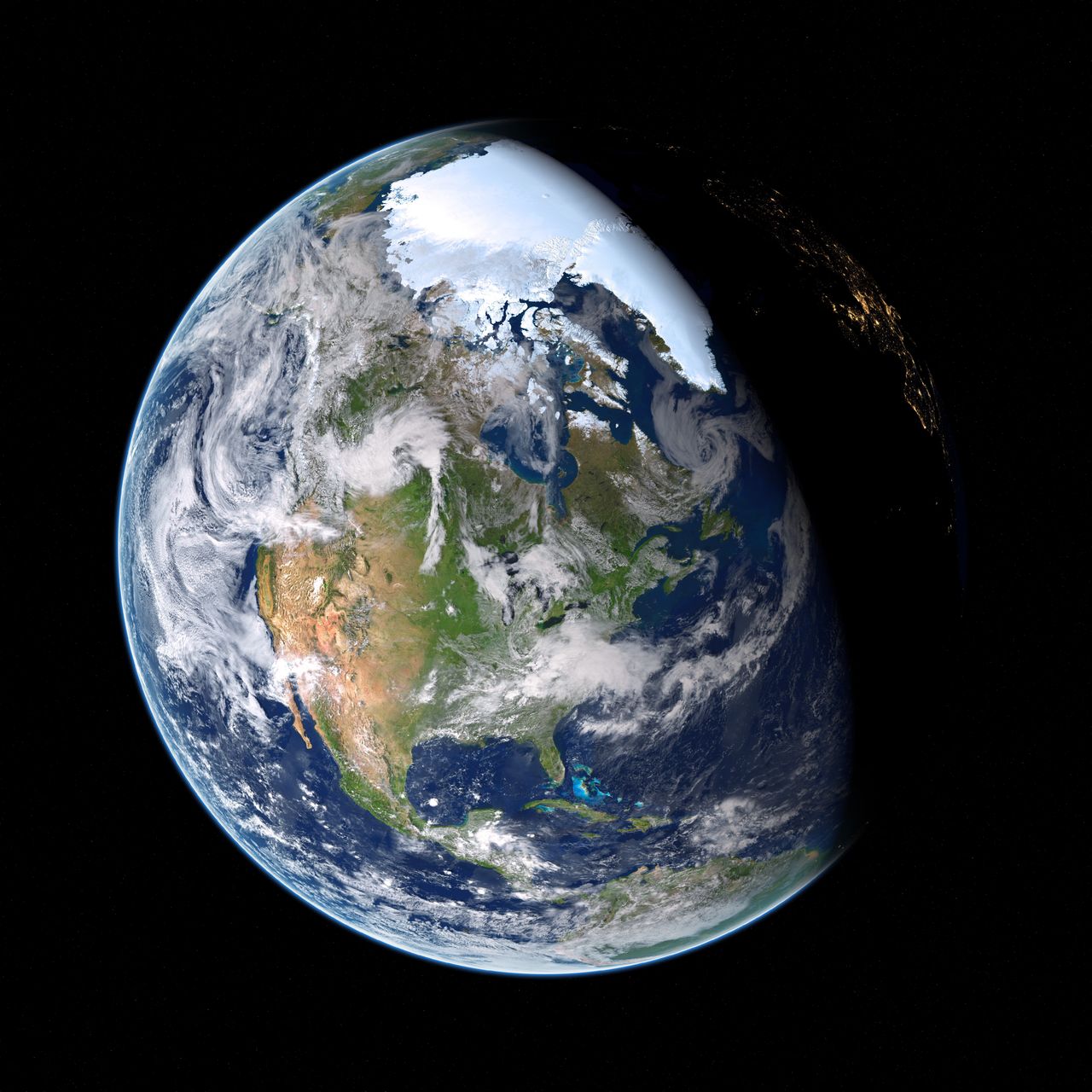
Movements of the Earth

Answer the following questions:

1. In your opinion, what are the two most important differences between the rotation and revolution of the Earth?

Answer:

 Rotation: Rotation is the Earth’s spinning on its axis, completed in about 24 hours, causing day and night.

Revolution:
Revolution is the Earth’s movement around the Sun, completed in about 365¼ days, causing seasons and forming one year.

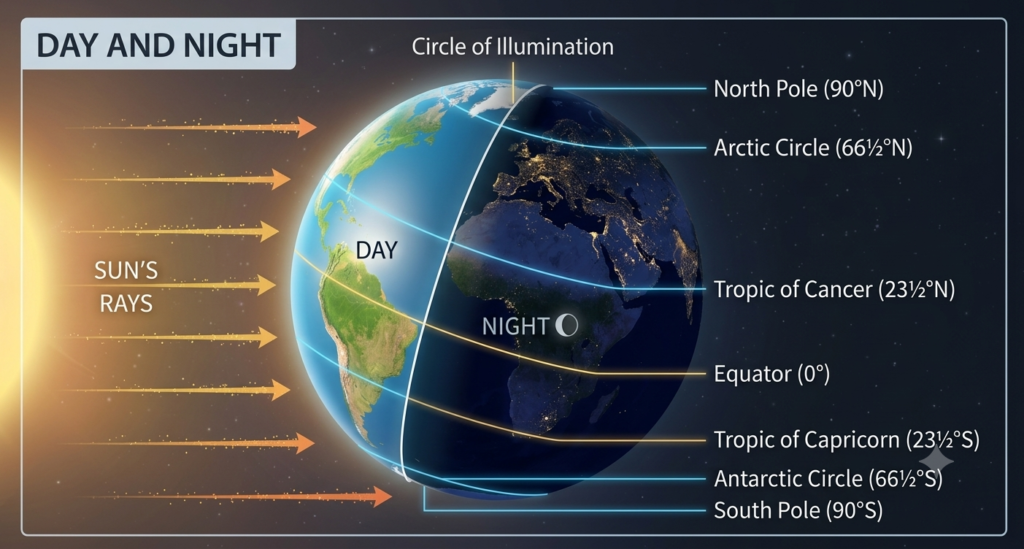
2. With the help of a diagram, explain how the Earth causes day and night?

Answer:

The Earth rotates from west to east on its axis. The side facing the Sun experiences day, while the opposite side has night. As the Earth rotates continuously, every place alternately experiences day and night.

3.The Earth is a perfect sphere. Do you agree? Give reasons for your answer.

Answer:

No, the Earth is not a perfect sphere. It is slightly flattened at the poles and bulges at the equator due to its rotation. Therefore, its actual shape is called an oblate spheroid or geoid.

4.What is a leap year?

Answer:

The Earth takes about 365 days and 6 hours (365¼ days) to complete one revolution around the Sun. Since our calendar has only 365 days in a normal year, the extra 6 hours are left out each year. After four years, these extra hours add up to 24 hours    (1 full day). This extra day is added to 29 February, making it a leap year.

5.If Earth’s axis were straight and not tilted at an angle of 23½° how would it affect the seasons and the duration of day and night on the Earth? Analyse.

Answer:

If the Earth’s axis were not tilted, there would be no seasons. Day and night would remain nearly equal, about 12 hours each, throughout the year. All places would receive almost the same amount of sunlight every day.


6. How does the revolution of the Earth cause the seasons? Explain with the help of a diagram.
Answer:

The Earth’s revolution around the Sun and its tilted axis of 23½° cause seasons. As the Earth moves in its orbit, different hemispheres receive varying amounts of sunlight, leading to summer, winter, spring, and autumn.

Diagram: Draw fig. 2.5 of page no. 21

7. Distinguish between the (a) Summer and Winter solstice and the (b) Vernal and Autumnal Equinoxes.


For its answer go through Page No. 21

Earth

Leave a Comment

Your email address will not be published. Required fields are marked *

Scroll to Top