
From villages to the first cities
Class 6th: Social Science Question Answer including Objective type questions
Publication: Orient Black Swan
Special Highlights:
- Solution to exercise questions.
- Group Discussion Through Comment Section. Students can post their questions in the comment section. Our dedicated team team will provide authentic answers of the questions or the queries sent by the students.
I. Fill in the blanks:
- Around 5,000 years ago, a highly developed urban civilisation emerged in the northwestern part of the Indian subcontinent.
- The cities of Harappa and Mohenjodaro were among the first sites of the Harappan Civilisation to be discovered by archaeologists.
- The Harappan cities were well-planned, with roads laid out in a grid pattern.
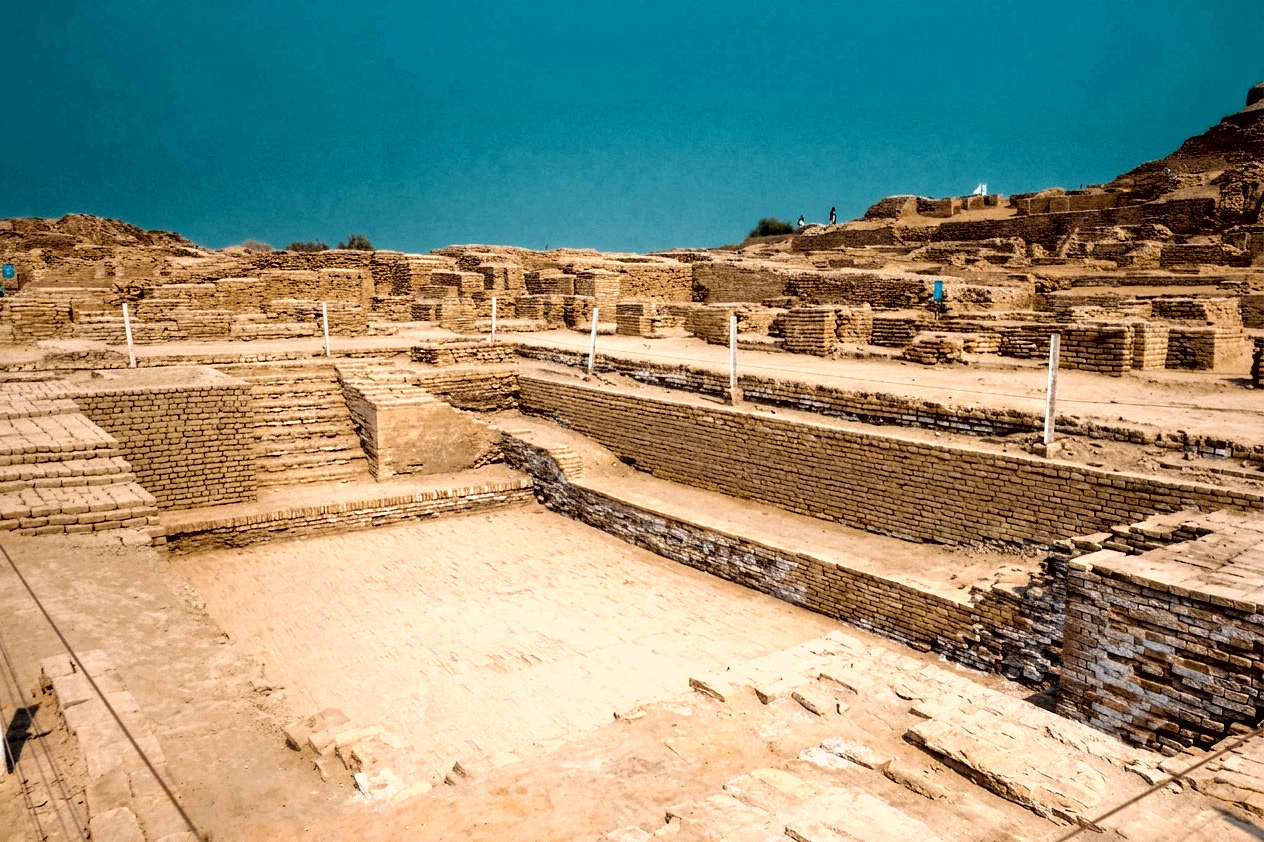
- The city of Mohenjodaro had a special building called the Great Bath, which was possibly used for bathing or ceremonies.
- Harappan craftspeople worked with metals like copper, bronze and gold.
II. State whether the sentences are true or false. Correct the ones that are false.
1. The Harappan Civilisation was larger than both the Mesopotamian and the Egyptian Civilisations.
2. All Harappan buildings were made of wood and mud.
3. Harappan seals were used in trade and often had inscriptions on them.
4. Farmers in the Harappan villages grew crops like wheat, barley and cotton.
5. The Harappan people had developed a pictorial script that has been fully decoded by historians recently.
Answer:
1.True
The Harappan Civilisation was larger in area than both the Mesopotamian and Egyptian Civilisations.
2. False
Correction: Harappan buildings were mainly made of baked bricks and mud bricks, not wood and mud.
3. True
Harappan seals were used in trade and often had inscriptions on them.
4. True
Harappan farmers grew crops such as wheat, barley and cotton.
5. False
Correction: The Harappan pictorial script has not yet been fully decoded by historians.
III. Choose the correct answers.
1. The Harappan Civilisation developed mainly along which rivers?
a. Ganga and Yamuna
b. Godavari and Krishna
c. Indus and Ghaggar-Hakra (Saraswati)
d. Brahmaputra and Narmada
2. Which Harappan site had a dockyard for sea trade?
a. Harappa
b. Mohenjodaro
c. Kalibangan
d. Lothal
3. Which of the following statements about the Harappan cities are correct?
i. Streets were laid out in a grid pattern.
ii. Most houses were built without any drainage.
iii. Wells were found in many houses.
iv. Cities had large public buildings in the citadel area.
a. i and iii only
b. i, iii and iv
c. ii and iii only
d. All of the above
4. There are two statements marked as Assertion (A) and Reason (R). Read the statements and choose the correct option.
Assertion (A): The Harappans used standardised weights and measures.
Reason (R):This helped ensure fair trade practices.
a. Both A and R are correct, and the R is correct explanation for the Assertion.
b. Both A and R are correct, but R is not the correct explanation for the Assertion.
c. A is correct, but R is incorrect.
d. A is incorrect, but R is correct.
5. Which of the following statements are true about the decline of the Harappan Civilisation?**
i. Earthquakes and floods may have damaged the cities.
ii. The Indus and Saraswati rivers may have changed their course.
iii. People abandoned cities and moved towards the south and east.
iv. Large-scale deforestation may have affected the environment of the Indian subcontinent.
a. i, ii and iii
b. ii, iii and iv
c. i and iv
d. All of the above
III. Answer Key
- c
- d
- b
- a
- d
IV. Answer the following questions:
1. What is a civilisation? Mention any two of its features.
Answer:
A civilisation is an advanced stage of human society with organised communities, developed culture and systems of governance. Two important features are:
i. Planned cities and
ii. Well-developed systems of trade and administration.
2. Discuss any two features of the Harappan Civilisation that suggest that it had a highly efficient and centralised authority.
Answer:
The Harappan cities had well-planned streets and drainage systems, showing organised urban planning. They also used standardised bricks, weights and measures across different settlements. Such uniformity suggests that people followed common rules and standards, indicating the presence of an efficient and possibly centralised authority.
3. Describe any two important structures of the Harappan Civilisation.
Answer:
Two important structures were the i. Great Bath at Mohenjodaro and ii. the dockyard at Lothal. The Great Bath was a large, carefully constructed tank probably used for important or ritual bathing. Lothal had a well-planned dockyard, which shows the Harappans’ knowledge of water management and maritime trade.
4. What were the main occupations of the Harappan people?
Answer:
The main occupations of the Harappan people were agriculture, animal husbandry, trade and craft production. Farmers cultivated crops such as wheat, barley and cotton. People also reared animals like cattle, sheep and goats. Skilled craftsmen made pottery, jewellery, tools, beads and seals. Traders exchanged goods with nearby and distant regions.
5. Explain the significance of the seals found in the Harappan sites.
Answer:
Harappan seals provide valuable information about their trade, culture and beliefs. Many seals have animal figures and symbols of the Harappan script. They may have been used to identify goods, traders or property. Their widespread discovery also suggests organised trade and communication between different Harappan settlements and other regions.
6. What evidence do we have of Harappan trade with other regions? How do you think having standardised weights and measures makes trading fairer and easier?
Answer:
Evidence of Harappan trade includes seals, beads, pottery, metals and other goods found in distant regions. Lothal’s dockyard also suggests maritime trade. Standardised weights and measures made trade easier because buyers and sellers could accurately measure goods. This reduced confusion and helped ensure fair and trustworthy transactions.
7. Imagine you are an archaeologist who has just discovered a new Harappan site. What features would you look for to confirm it belongs to the Harappan Civilisation? Why?
Answer:
I would look for planned streets, drainage systems, baked-brick buildings, wells, seals, pottery, standardised weights and measures, and Harappan-style artefacts. I would also examine the settlement’s architecture and craft remains. These features would help confirm the site because they are characteristic of Harappan urban planning, technology, trade and culture.
8. What does the importance given by the Harappan people to drainage and bathing spaces tell us about their society?
Answer:
The importance given to drainage and bathing spaces shows that the Harappan people were highly concerned about cleanliness, hygiene and sanitation. Their well-planned drainage systems, bathrooms and wells indicate advanced civic planning. It also suggests that maintaining a clean and healthy environment was an important part of their urban life.
9. Describe the diet of the Harappan people.
Answer:
The Harappan people had a varied diet. They cultivated wheat, barley, peas, lentils, sesame and mustard. They also consumed fruits and vegetables. Evidence shows that they ate meat from cattle, sheep, goats and other animals. Fish was also consumed in some areas. Thus, their diet included both plant and animal foods.
10. What can we infer about the Harappan script based on the evidence available?
Answer:
The Harappan script is found mainly on seals, pottery, tablets and other objects. It contains many different signs and symbols and was generally written from right to left. However, the script has not yet been deciphered. Therefore, we cannot confidently understand their written records or know exactly what language they used.